Below is a list of general supportive steps you can take at home when you first notice a sick fish. In many cases simple steps like those below can rectify a health concern if caught early enough without the need for medication. Simple actions like providing excellent water quality and aeration will go a long way for a poorly fish.
-
Quick isolation from the group is essential in controlling an outbreak of disease.
-
Check your water quality and make sure all parameters are within the reference range. If you detect a water quality spike correct this gradually via a sequence of water changes and other actions.
Read our guides on water quality spikes in both the Pond and Pool and Tank and Aquarium advice pages.
-
Make sure you are providing excellent aeration of the water via air stones or agitating the water surface by using the filter outlet or water feature. Sick fish will have a higher metabolic rate and therefore oxygen consumption will also be higher so you need to ensure these requirements are met.
-
Don’t do anything that could cause sudden shock or stress to your fish. Keep lighting, noise and vibrations low. Don’t change anything significantly in water chemistry or the environment.
-
For most freshwater fish, adding a concentration of salt at 1.5g/L can help support the kidney in states of disease. NB. This is not suitable for certain species of fish, loaches and catfish and sturgeon don’t tolerate elevations in salt very well.
Salt is safe to use with koi and goldfish in this way.
-
Via the use of Vitamins such as eSHa Optima (for aquariums). For koi, Yugen by Takazumi is an excellent immune support food if the effected fish is still eating well.
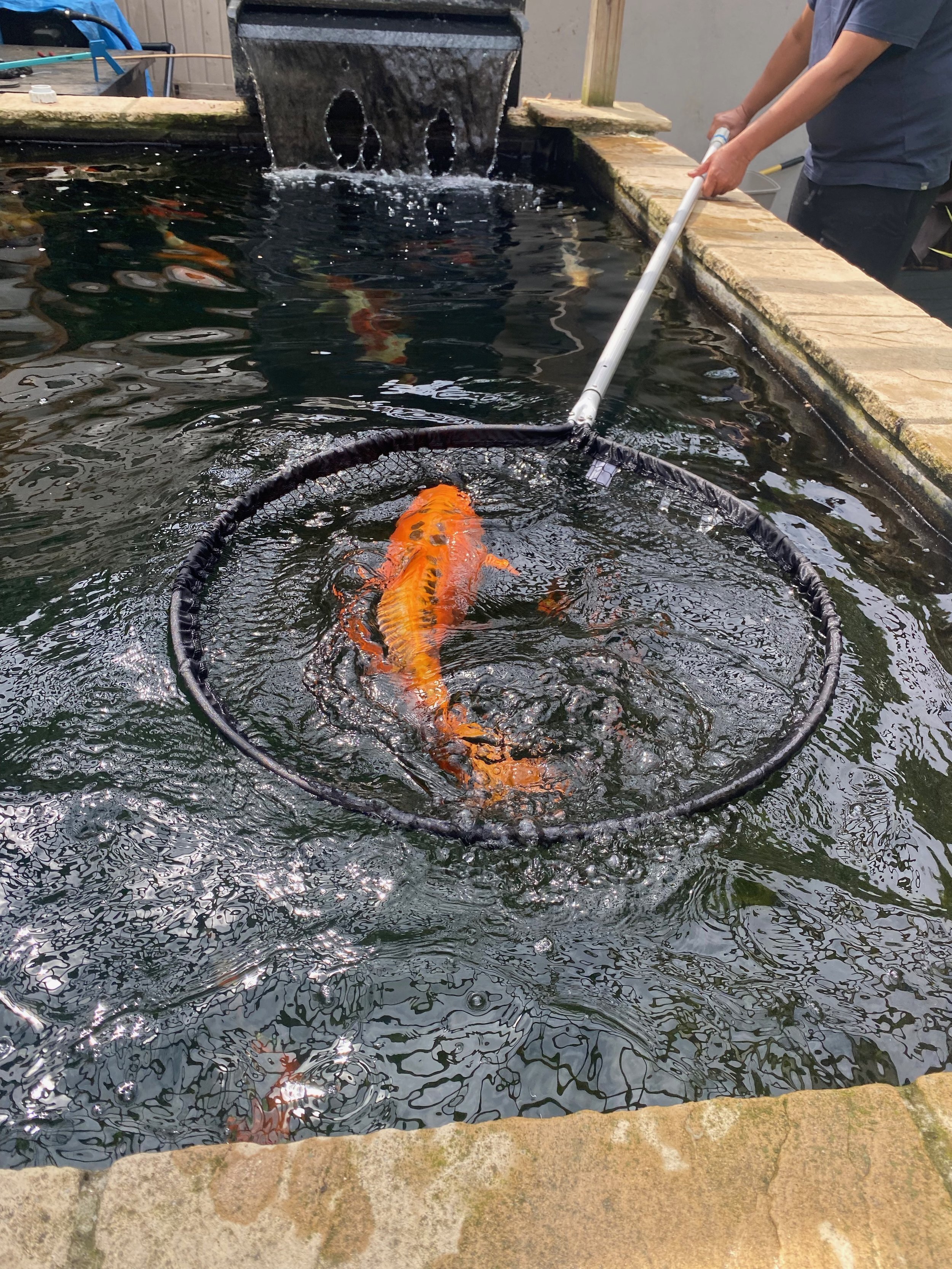
Isolate the sick fish as soon as possible
It is very important that if you think your fish needs to be assessed for diagnostics and treatment that you book this in with us as soon as possible.