In some circumstances it is kinder to euthanise a fish instead of pursuing treatment or letting the fish pass away naturally. Certain circumstances include but are not limited to: aggressive disease states, inoperable tumours, severe traumatic damage and cases with absent or limited responses to treatment.
The kindest and easiest way to euthanise a fish at home is with an overdose of anaesthetic. An overdose of anaesthetic can be administered to a fish by immersing it in a solution of pond or tank water and anaesthetic agent. Several anaesthetic products are available over the counter without the need for a veterinary prescription like Aqua-sed™ or Koi Sedate. Although not intended for animal use, clove oil (active ingredient Eugenol) can also be used for this purpose.
It is important to remember that although heading in a one-way direction, the process of euthanasia needs to be done with the least amount of stress exerted on that fish as possible in order to achieve euthanasia humanely. This means using water from the original tank or pond and providing an air stone which also helps circulate the anaesthetic solution.
In-humane methods of euthanising fish include freezing and asphyxiation (suffocation by leaving the fish out of the water). Destruction of the cranium (the skull and brain) via percussion with a heavy object is possible but not recommended.
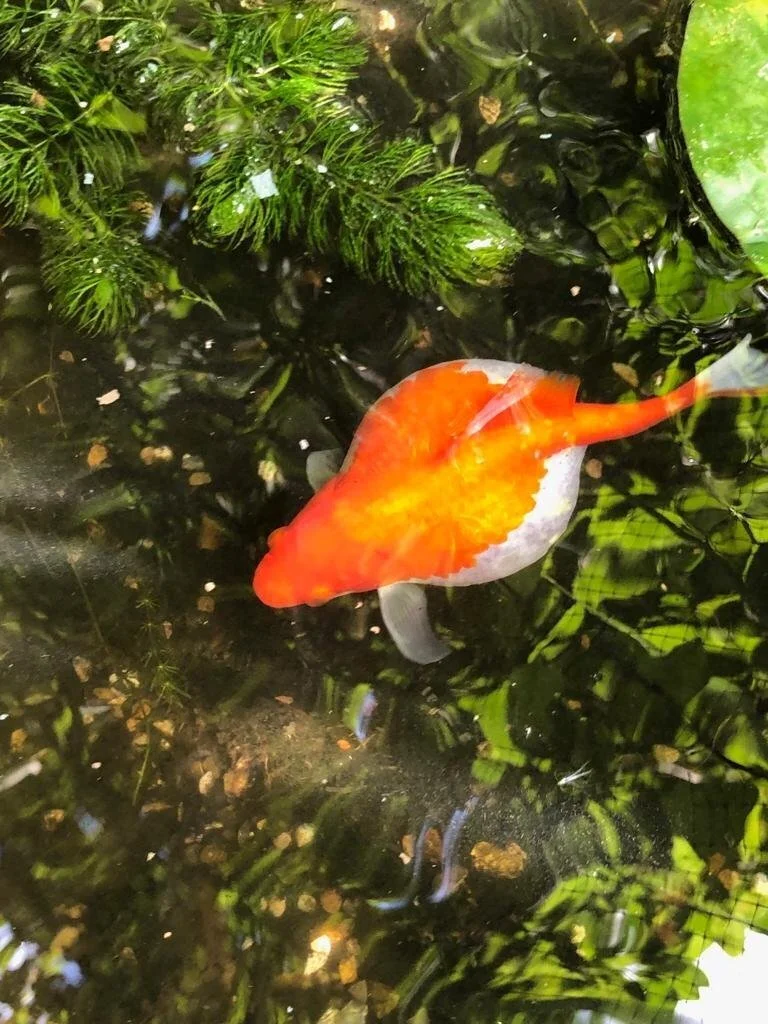
In some circumstances it is kinder to euthanise a fish instead letting the fish pass away naturally.
To euthanise a fish using the immersion method
Prepare a suitable sized container for the solution. It should be big enough that the fish can turn around in and is deep enough that the dorsum (top) of the fish is covered by water.
Place an air stone into the container
Prepare you euthanasia agent in a separate container/beaker and then add this to the prepared container.
If using MS-222, please make the solution is buffered.
Add the anaesthetic agent to the container. Ensure the agent is well mixed into the euthanasia container.
Add the fish to be euthanised
Reduce stress to a minimum by reducing sounds, vibrations and light. It often a good idea to cover the container with a towel to reduce light levels.
Allow the agent time to kick in. At the correct dose you should see the fish stop breathing within 30 – 60 seconds.
Observe the fish closely, one breathing has stopped start a timer for one hour (minimum). After an hour has elapsed you are able to dispose of the body in accordance with local council recommendations.
To ensure euthanasia has been achieved a final step of pithing the brain or exsanguinating the body by cutting the gill arches is recommended.
Notes: Once the fish is immersed in the solution, you may notice a hyper-excitatory phase where the fish may dart around exhibiting an increase in energy. If this occurs, this will subside after a couple of minutes. During the next phase of anaesthesia, the fish will lose its neutral buoyancy and righting reflexes before opercular movements stop (stops breathing).
Euthanasia Doses
Clove oil: 0.4ml – 1.2ml per litre
Phenoxyethanol based products such as Aqua-Sed: Follow guidance on packaging
MS-222: 400mg/L. Buffered with sodium bicarbonate or carbonate.