There are a few cases where surgical treatment for a disease is recommended. Common surgical procedures performed by London Aquatic Veterinary Services include enucleation (removal of one of both of the eyes) and external tumour removal.
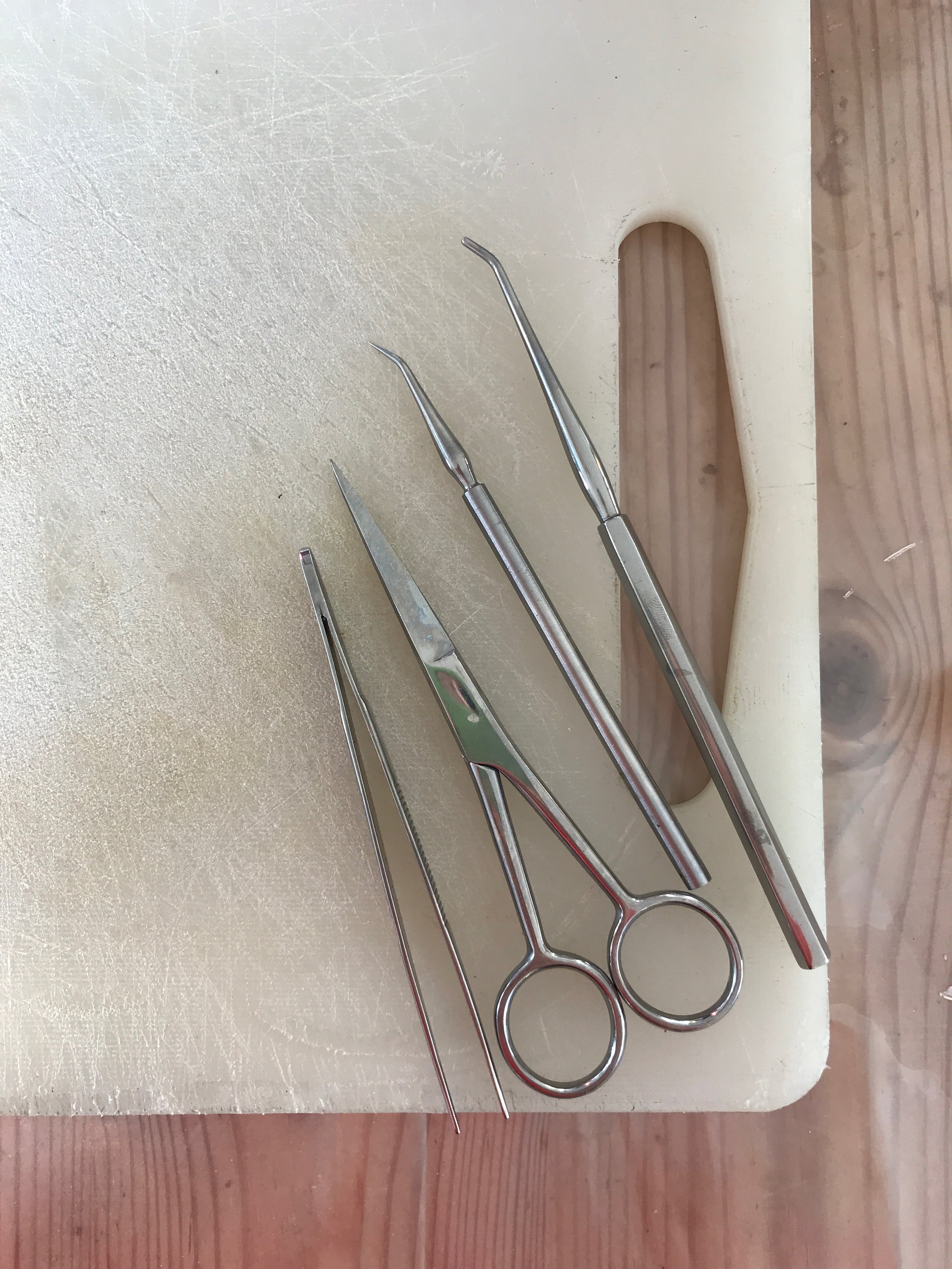
All surgical cases will need to be assessed prior to surgery to ensure that
The procedure is viable
The fish is healthy enough to undergo the procedure
The aquatic environment is healthy and clean to receive the fish post-op.
If surgical treatment has been recommended to you, here is what to expect!
How do you anaesthetise a fish?
With LAVS, all fish are anesthetised using an immersion based anaesthetic called MS-222. Which is white powder that is dissolved into a solution.
When a fish is immersed in this solution of anaesthetic the fish breathes in the anaesthetic via the gills which then diffuses into the bloodstream. From the bloodstream the anaesthetic agent crosses the blood-brain barrier to induce a state of anaesthesia.
Under a suitable plane of anaesthesia, the fish is unaware of its surroundings and unable to detect or respond to painful stimuli (such as the procedure that is being performed).
Once returned to freshwater, the fish starts to breath in non-medicated water and the plane of anaesthesia is reversed and the fish starts to wake up.
What are the risks of surgery?
As with any animal undergoing anaesthesia, we cannot ever fully exclude the risks of something adverse happening under anaesthesia. Prior to the surgery the vet will highlight any particular concerns and risks with the associated procedure. General risks that are likely be discussed include;
Negative reaction to the anaesthetic agent
Blood loss (particularly with big or highly vascularised tumours)
Post-operative infection
What to prepare
You don’t need to prepare much at all, London Aquatic Veterinary Services will bring all the equipment necessary for the procedure.
Please prepare a selection of buckets/bowls/containers for the vet to use for the anaesthetic solution.
It is very useful to have a table or work surface cleared for the vet to work on.
Post-operative care
The vet will guide you on the day with regards to particular post operative care instructions.
In a lot of cases, post-operative antibiotics will be provided to you to give to your fish in the days following the procedure. The majority of these medications will be injectable medications. A full demo and instructions on giving the medications will be given on the day.
If you have any questions regarding a surgical procedure with your fish please get in touch.