Preparing for Winter
Winter can be a tough time for fish in outdoor ponds. Although the majority of fish will survive the depths of winter in an unheated pond there are several important steps and factors to be considered to ensure that your fish not only survive winter but flourish the following spring.
Preparation of the Pond
Firstly, assess whether your pond is a suitable environment to overwinter fish by considering the depth of your pond. During the winter months fish will congregate in the deepest areas of the pond where the water is warmest. Ponds need to be at least 1 meter deep to protect fish from the cold surface water. If the pond is too shallow, fish will be exposed to freezing temperatures and suffer from cold shock.
Shallow ponds are also at risk of deep freezing in extreme weather resulting in thick layers of ice at the surface. Ice is a problem for many reasons, most crucially it prevents gas exchange leading to a reduction of oxygen and a build-up in carbon dioxide. Carbon dioxide is acidic in solution so a build up in concentration can drastically drop the pH of the pond.
Deep layers of ice also reduces the amount of space the fish can physically occupy within the pond. Waste products will build up at a faster rate and there will be less oxygen available to the fish. For this reason, it is also important to assess the stocking density of your pond prior to winter.
There are several ways to prevent surface freezing such as the use of bobbing water features like plastic ducks or footballs. Alternatively, de-icers, air stones and continuous water movement will also help reduce the risk of the pond icing over.
Raised ponds are more exposed to the elements so are more susceptible to freezing. Further to this, raised ponds with windows are even more exposed and are particularly prone to loosing what little heat is retained. To reduce the loss of heat consider covering the surface of the pond. Various types of insulating covers are available to purchase from plastic balls (like those seen in kids play areas and ball pits) to durable thick layers of plastic and foam. In addition to surface covers, covering exposed windows and sides with insulating material can really help during the coldest months of the year.
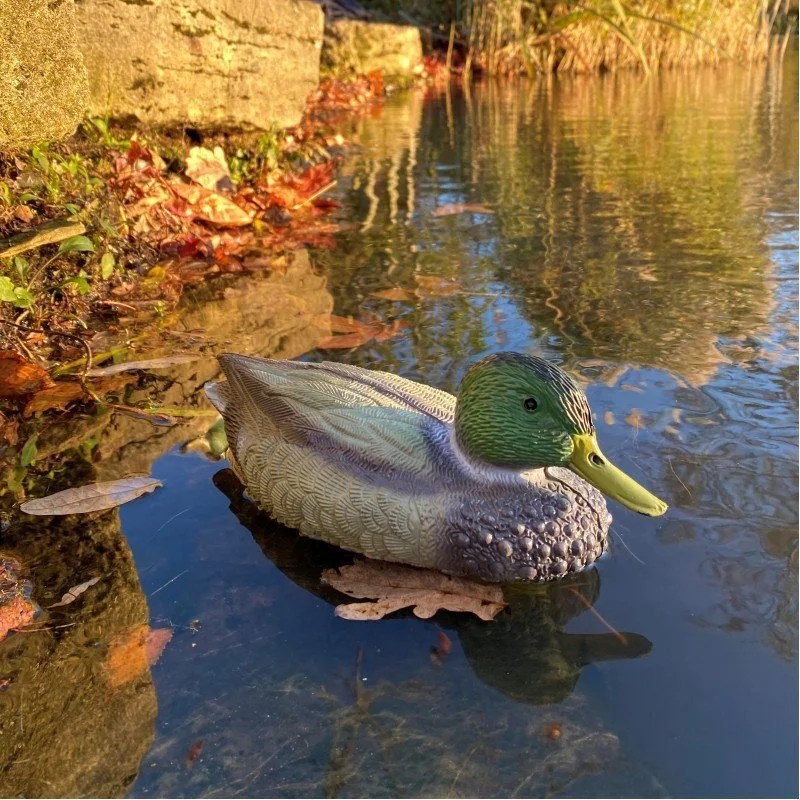
You can prevent surface freezing by using bobbing water features like plastic ducks or footballs.
Overwintering fish indoors
If you think your pond isn’t suitable to overwinter your fish in you can choose to bring them inside or under shelter to provide them with some heat and protection from the elements. If you opt for this remember to bring the filtration with you. There is no point starting a new filter system for the winter period as you will have to constantly battle water quality issues (new pond syndrome) throughout the winter period which will instantly put your fish at risk of disease.
Autumn Cleaning
Just prior to winter remove any dead or dying vegetation and organic material such as fallen leaves. Excess organic material sitting in the pond over winter will contribute to a build-up in ammonia. Check your water quality frequently towards winter. If water changes need to be performed take care not to suddenly drop the water temperature by performing a large water change. Instead perform small and frequent water changes to avoid this risk.
Continue to monitor water quality throughout the winter period.
Predators
During the winter period fish enter a hibernation like state, sometimes known as torpor. During this state, the metabolism of the fish drops right down, appetite diminishes and fish become very still and slow. This makes them ideal targets for predators so take every step to make sure you are protecting your fish from local opportunists!
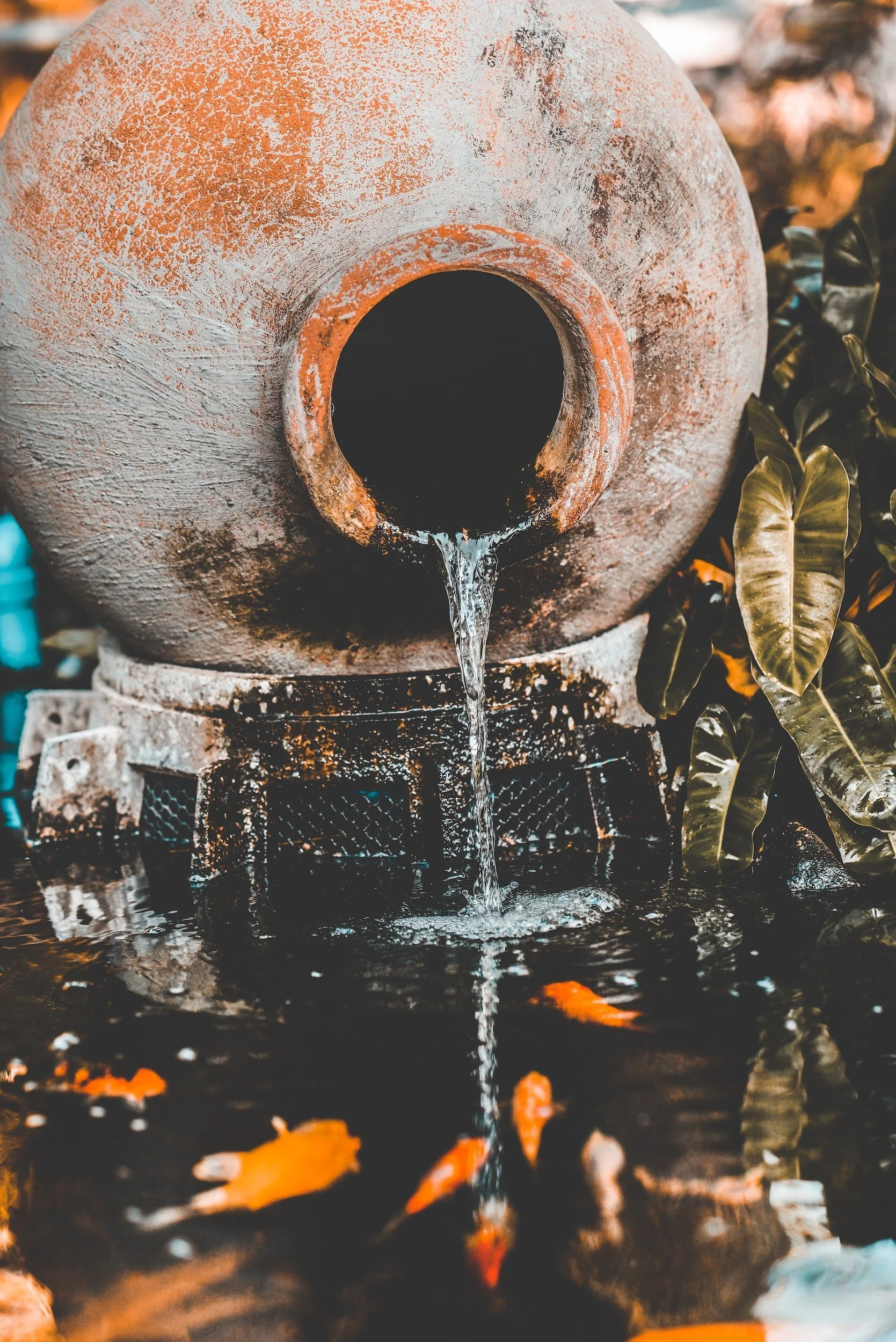
Turn off or bypass any water features that mix cold water from the surface of the water into the warm zone.
Water Features
For unheated ponds it is vitally important to conserve the warmer water in the lower depths of the pond ‘the warm zone’ as this is where all your fish will congregate to overwinter.
There are several ways to do this. Firstly, turn off or bypass any water features that mix cold water from the surface of the water into the warm zone. It is a good idea to move deep lying air stones to shallow areas or turn them off completely in order to maintain the temperature in the warm zone too.
Assess water features around the pond. Tall water features like waterfalls and fountains will expose falling water to cold ambient air temperatures which will drop the temperature of the pond quickly. Similarly metallic lips or metallic water features will also cause rapid cooling of the pond. All of the above should either be bypassed or turned off during winter period for maximum protection of the warm zone.
Filtration
Keep filtration running throughout the winter period. Although the bacteria that make up the ‘biofilter’ are dormant and not processing waste products, running filtration will help keep the water clear and process debris. It will also keep water circulating which can prevent the surface from freezing. It is recommended to turn down the flow rate of the filter and move the outflow (if possible) to shallower areas of the pond to reduce the cooling of the warm zone.
The main reason and benefit in keeping filtration running throughout the winter period is to reduce the risk of water quality issues in the spring. If you turn filtration off during winter and allow the filter media to dry out you will need to start the biofilter from scratch in the spring. This means balancing and managing water quality issues until the biofilter has established which can take 6-8 weeks. At the same time, fish will be waking up and eating more, subsequently producing a lot more waste. The above combination of a new and young biofilter will quickly result in water quality spikes and disease. The risk of disease is even higher in the spring due to a slow immune system post winter, which furthers the propensity for disease.
Take care with UV sterilisation units during the winter period. Trapped frozen water in the units can permanently damage the equipment. It is a good idea to disconnect, drain and store sterilisation units somewhere dry and protected until the Spring.
Preparing the fish for Winter - Diet
Preparation for winter starts as soon as the water temperatures start to decline. Start to wean your fish off the higher protein foods fed during the summer months onto lower protein diets that a higher in fats and carbohydrates. Wheatgerm based diets are a popular and suitable diet choice for autumn and winter diets months. If in doubt feed manufactures will give guidance on what water temperatures the food is suitable to feed at so check the label if you’re unsure.
At a water temperature of around 10ºC the appetite of your fish will be noticeably reduced and by 7ºC most fish will not be eating at all. It is advisable not to feed fish routinely below 10ºC. Should you pass the pond and fish are up at the surface looking for food, you can feed them but do so sparingly. Remember any excess food fed will result in a build-up in ammonia which will be detrimental to the health of your fish.
Immune System
During the autumn months I recommend strengthening the immune system of the fish in preparation for the winter period ahead. The first action I recommend taking is to feed the fish a 5 day course of a specialised diet called ‘Yugen’ by Takazumi.
Yugen is a great food stuff designed to be fed 4 times a year for 5 days only. It contains a great mix of vitamins and nutrients but most importantly an immunomodulator bioprotein which essentially ‘turns on’ and activates the immune system. I recommend feeding Yugen for 5 days in the autumn whilst the fish still eating every day consistently. This will be dependent on ambient and water temperatures but this is usually around October, November time. Please note this food is not designed to be fed consistently throughout the year and should only be fed in short, sharp bursts for maximal benefit.
Top Tip
I like using this Yugen pre and post winter but also after any prolonged episodes of stress or disease. The immune modulation from this food promotes a speedy recovery.
In the wind down to winter I also recommend dosing the pond water with Ascorbic Acid (Vitamin C) to support the immune system. I recommend a dose of 25g/1000L once weekly for 3 weeks. It is very important the Vitamin C is sugar free so as not to cause a bacterial bloom in the water. Although dosing with Ascorbic Acid is incredibly safe don’t forget it is a weak acid so overdosing a system with Vitamin C can lead to a drop in pH. Always dose responsibly and accurately.
Health Checks
Pre-winter health checks are very important and will ensure your fish overwinter successfully and flourish again the following spring. Pre-winter health checks will assess water quality, parasite levels as well as the general health of the fish. Depending on the assessment, guidance will be given on relevant treatment plans and tasks for winter preparation.
Heated Ponds
If you have the luxury of being able to heat your pond year round consider the temperature at which you’d like to overwinter the fish. The key here is consistency and stability. If the water temperatures fluctuate repetitively, you will be subjecting your fish to stress and opening the door to disease. Keep water temperatures as stable as possible. Insulating the pond will help you achieve this.
For maximal protection during the winter, heat the water to 14 degrees or above to keep the immune system of the fish in peak action. Avoid heating around the 11-14 degree Celsius mark as it is in this temperature range that the immune system of the fish will be reduced but parasites and bacteria will still be active. If 14 degrees is not achievable, it is safer to heat somewhere between 7 and 10 degrees as this will prevent freezing temperatures and the risk cold shock but also avoid the risky limbo period around the 12 degree mark where disease could make use of a reduced immune system.