
Every tank and aquarium will have slightly different maintenance requirements based on the number of fish in the aquarium and the quality of the filtration systems present. Poor water quality is one of the most common causes of disease in fish but thankfully it is something we can control and prevent easily through routine aquarium maintenance.
Water changes
Regular water changes are crucial to a healthy aquatic environment. Not only do water changes refresh the aquarium water (which can help rebalance water values such as KH and pH) but also dilute out any building waste products.
One of the important waste products controlled by water changes are nitrates.
Nitrates are the last waste product produced by the biofilter, therefore the only way nitrates can be reduced or removed from the aquarium is either via consumption from plants or more pertinently, through routine water changes. It is for this reason, water changes need to performed regularly, at least every 1-2 weeks to keep nitrates low.
For goldfish aquariums weekly water changes are the minimum and in some cases bi-weekly water changes are required to keep on top of water quality. This is due to large amounts of waste goldfish produce – they are little piggies! Most tropical tanks can get away with 1-2 weekly water changes but this depends on the number of fish in the tank and the quantity and frequency of feeds etc.
To confirm what frequency your aquarium needs water changes, test your water quality weekly, when nitrate values start to increase to above 20-30mg/l a water change is due.
One way to test if your current schedule is good enough for your fish, check the water quality and most specifically the nitrates after a water change. If nitrates are still elevated (>20-30mg/l) after a water change then they were even higher before the water change which indicates you have left it too long between water changes. An aquarium with a high level of nitrates is often described as ‘Old Tank Syndrome’. The fix for old tank syndrome is to increase the frequency and quality of water changes.
An alternative to adjusting the frequency of water changes is to adjust the quantity of water changed in each sitting. Caution with this option, it is often much safer to perform smaller more frequent water changes than it is to do fewer but bigger water changes.
As a rough guide 20% of the aquarium water should be changed in one sitting. Never change more than 50% of the aquarium water unless in an emergency (severe pollution of the water).
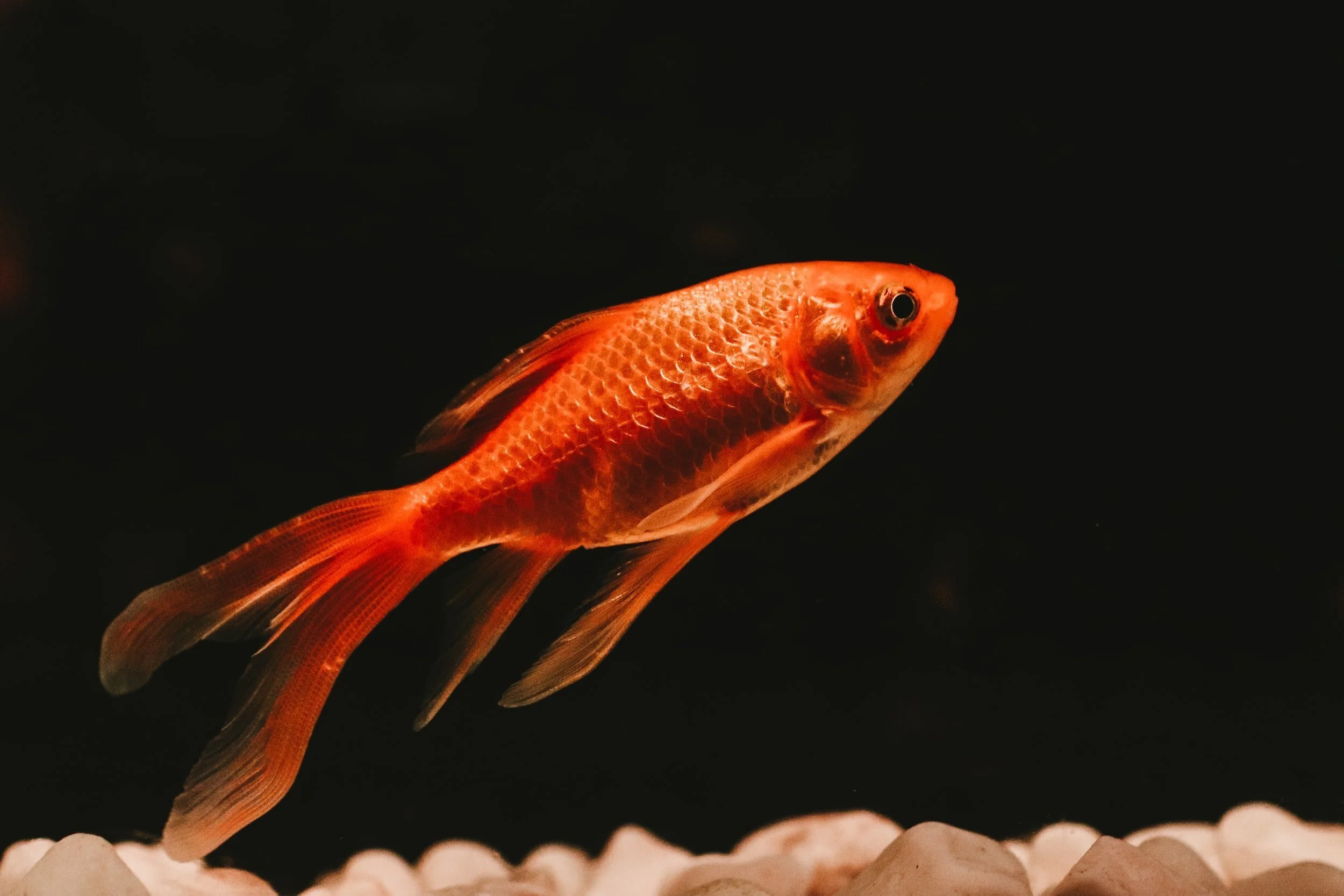
Goldfish are little piggies, you will need to change their water frequently for optimum health
Top Tips
• Always temperature match the incoming water to the aquarium water by using a thermometer. Handheld laser thermometers work really well in this scenario. Big changes in water temperature will cause direct stress on your fish and open them up to disease. Outbreaks of white spot disease (Ichthyophthirius multifilis) are often seen after inappropriate drops in water temperature.
• Do not run the incoming water source directly in the aquarium. Fill the incoming water into a bucket before adding to the tank. This allows you to match temperatures and dechlorinate tap water before it mixes with the fish.
Tap water
Along with other microelements, tap water can contain substances harmful to fish health such as chlorine and chloramine (chlorine and ammonia bound together) and various heavy metals. For this reason, it is advised that all incoming water is mixed with a chemical dechlorinator (such as SeaChem Prime or API Stress Coat) prior to mixing into the tank.
Filter Inspection
During your routine water changes or at least every 2 weeks, it is a good idea to check in on the health of the filter media. Start by checking the filter media isn’t built up with sludge and debris. Sludge that coats the filter media will directly inhibit the ability of the biofilter to work. To remove excess sludge, rinse the media briefly in a bucket of old tank water. Do not rinse filter media in tap water as chlorine and other elements in tap water can kill the biofilter. If the biofilter is damaged or reduced significantly during routine filter maintenance then you are at risk of causing ammonia and nitrite spikes in the following days.
It is important to ignore any filter media instructions that say you need to replace the filter media every 3 months or so.
Unfortunately, lots of people fall into this pitfall thinking they are doing the right thing but in reality, you are potentially putting your fish at risk!
When you throw away the filter media and replace it with a new sponge for example, you are throwing away all of the good bacteria that make up the biofilter, which is solely responsible for removing toxic waste products such as ammonia and nitrite.
When you replace the media, you are essentially starting the biofilter from scratch and so have to wait 4-6 weeks for biofilter to re-establish itself on the new filter media. This means for the next 4-6 weeks you could be dealing with water quality spikes whilst the biofilter catches up.
For this reason, only change the filter media when the sponges are literally falling apart and when you do, never change more than 30% of the media in one go and allow at least 2-3 weeks before replacing other portions. This way you can start to colonise the new media without causing a complete crash in the biofilter. Refresh your knowledge on the biofilter and why this is important via the New Tank Syndrome advice page .
Note, certain filter media such as polyfilters , Zeolite and specialist sponges or pads that bind nitrates or phosphates will expire, so these can be replaced as instructed.