
A common water quality issue experienced by all fish keepers at some stage or another is a spike in nitrogenous waste pollutants such as Ammonia (NH3) and Nitrite (NO2). This occurance is sometimes known as new pond syndrome. For the purposes of this article we will refer to the build up in ammonia and nitrite as new pond syndrome, NPS.
To understand why ammonia and nitrite build up, it is important to understand the basics of the nitrogen cycle and the function of the ‘biofilter’ and the nitrogen cycle.
The term ‘biofilter’ refers to the population of bacteria that live in the filter of the pond that are responsible for turning toxic waste products such as Ammonia and Nitrite into the less toxic product Nitrate. The bacteria that make up the biofilter live on the media housed within the filter, common filter media types found in pond filters include beads, K1, sponges and porous rock. Whichever filter media you have, the purpose of the filter media is to provide a large surface area for bacteria to colonise and live on. This population that lives on the filter media is known as the biofilter.
Fish produce waste in the form of ammonia which is secreted in their urine and continuously through their gills via diffusion. It’s the bacteria in the biofilter that are responsible for turning toxic waste products into less harmful nitrogenous products, allowing fish and other organisms to flourish, toxin free, in their aquatic environment. There are two groups of bacteria present in the biofilter Nitrosomas spp. and Nitrobacter spp. which perform this function.
The first step in the nitrogen cycle performed by the Nitrosomas group of bacteria is the conversion of the primary waste product ammonia into the secondary waste product Nitrite. Nitrite is then turned into the final nitrogenous waste product nitrate by Nitrobacter spp.
The end product of the nitrogen cycle is nitrate. Thankfully Nitrate is not as toxic and ammonia and nitrite and higher levels can be tolerated by fish. The nitrogen cycle doesn’t end there, nitrates can then be used by aquatic plants and recycled into the environment.
You can read more about nitrates control in our ‘Pond Water Quality Spikes – Nitrates’ advice page.
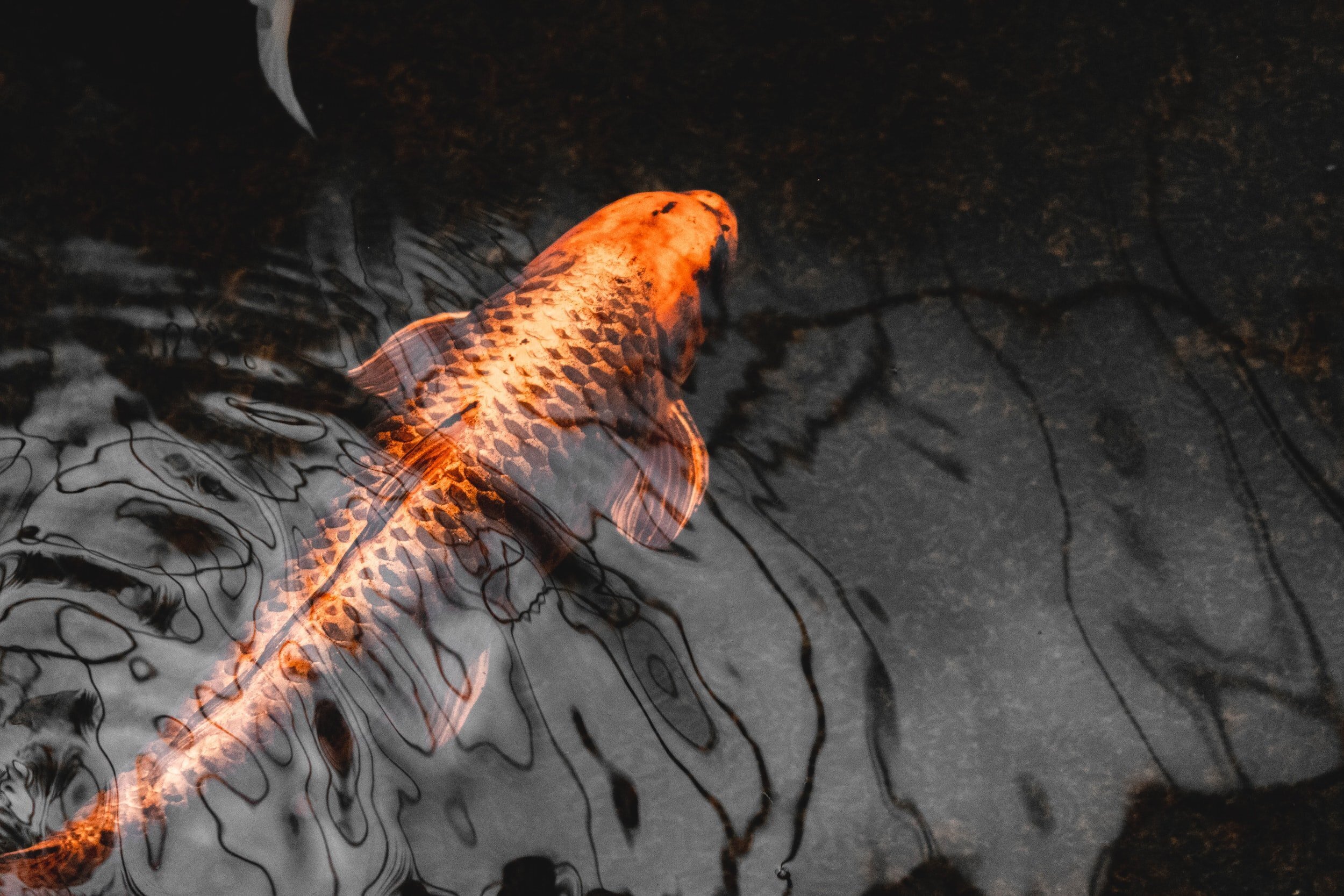
The biofilter is key to maintaining a healthy pond
Why does New Pond Syndrome happen?
NPS happens when there is a problem with the ‘Biofilter’ but NTS is not isolated to newly setup ponds. NPS can happen at any time if the biofilter isn’t cared for appropriately. Some of the most common reasons for biofilter failure are listed below…
The biofilter has not been set up for long enough
The reason this condition has its nickname, New Pond Syndrome. It takes 4-6 weeks for most biofilters to properly establish (grow enough bacteria on the media to start coping with the waste products that fish or other aquatic life produce).The filter has stopped working efficiently
Filter blockage, power outage, media covered in sludge/grime, broken pump. All of which prevent the filter from working at the optimal level. Anything that prevents the polluted pond water getting to the filter media and therefore the bacteria, has the potential to start causing water quality spikes.Too much waste for the biofilter to cope with
The filter media can only hold a finite population of bacteria, it is possible that the fish in the pond produce too much waste for the biofilter to actually cope with. In this case the bacteria become saturated and waste products start to build up. This is further worsened by the fact that as waste products build up, the biofilter will become inhibited and work even slower to process the excess waste, resulting in an even faster build up in waste products and dangerous conditions for your fish.Dead or dying biofilter
Being made up of living organisms, bacteria, it is possible to kill the biofilter. Many medications such as antibiotics or anti-parasitics can wipe out a biofilter. Changes in water chemistry such as pH and temperature are also capable of killing the biofilter.
How do you fix New Pond Syndrome?
So we now we know why NPS happens let’s look at how we fix it.
Biofilter hasn’t been set up long enough
Give it time! Set your filter up and have it running for as long as possible before adding fish. Most filters are capable of dealing with fish from 2-3 weeks in. In fact adding small fish can even speed up the maturation of the biofilter via providing a food source for the bacteria to start using and surviving off.You can further speed the process along by adding cultures of ‘good bacteria’ or ‘nitrifying bacteria’ to the filter. This will kick start the population of bacteria present in the filter and start breaking down the waste products sooner.
For outdoor ponds consider the influence of temperature. Bacteria will colonise media faster at warmer temperatures, consider adding a heater to the filter.
DO NOT REPLACE THE FILTER MEDIA REGULARLY
This is a common pitfall seen with aquarium clients but the same goes for ponds. Contrary to filter manufacturer’s instructions and guidelines which often state to replace the filter media every 3 months… Do not do this!
Consider the repercussions, if you were to replace an established biofilter by throwing away a filter sponge and replacing it with a new, uncolonized sponge… you will be starting from the beginning and you will need to wait another 4-6 weeks for bacteria to colonise the new sponge. During which phase you will have to constantly battle an increase in waste products as your young biofilter gets up to speed. Prolonged or repeated episodes of water quality spikes will put your fish at high risk of disease.
To avoid this pitfall, monitor and inspect the health of the filter media monthly, if it starts to fall apart or has big holes in it, replace only a small amount of the media with fresh media. That way you can start to colonise the new media without causing a crash in the biofilter. Never change more that 25% of the media in one go and allow 4-6 weeks before replacing other portions.
This being said, there are some pond media like the beads in bead filters that will need to be replaced or replenished periodically (after X amount of years). Seek guidance from the manufacturers or installation companies as to when this is required. The same principle will apply though, never change 100% of the media in one go unless you have a back-up of established biofilter ready to pick up the slack.
The filter has stopped working efficiently
Check that the mechanics and the plumbing supplying the filter are working as they should. Check for blockages, leaks and faults in equipment. Blocked bottom drains are a common cause. Remove excess sludge on filter media regularly by performing back washes and rinses in old pond water.
“Never clean your filter media in tap water. Chlorine in the tap water will kill the biofilter. Instead, rinsing media in old pond water will get rid excess sludge but it won’t kill the biofilter. ”
Too much waste for the biofilter to cope with
Too many fish? Consider reducing the population by passing some fish onto neighbours or friends.
Unable or unwilling to get rid of any fish then consider adding additional filters to the system, particularly filters that promote biological filtration (AKA the nitrogen cycle).
Assess the amount and frequency you are feeding your fish. Overfeeding will directly increase the amount of waste products produced. As a rule of thumb all food should be eaten with 2-3 minutes. If there is still food hanging around at the surface, you are feeding too much and will need to reduce the amount you offer.
Another technique would be to look at the diet you are feeding your fish. Look at the protein content in the diet. High protein diets (those of 40% and above) will produce more waste. By taking down the protein content you are feeding you can significantly reduce the amount of waste produced. Click here to read our guidance on feeding fish.
Dead or dying biofilter
Identify what chemical or water quality issue could have killed the biofilter and stop using it if safe to do so.
If required, remove harmful chemicals in the system by either using activated carbon or zeolite in the filter or specialised chemical detoxifiers in the water to mop up any biofilter killing chemicals.
After a biofilter die off remember to replenish the lost bacterial population in the biofilter by supplementing with ‘good or nitrifying bacteria’. It is good practice to dose with these products when performing routine cleaning and maintenance on ponds.